
Style & Trend
Our complete guide to wedding fabrics
Organza, satin or tulle? Here’s how to tell the difference.
Key Takeaways
- The fabric you choose affects how your wedding dress looks, feels, moves and photographs throughout your day.
- Lightweight wedding fabrics like chiffon and tulle are ideal for summer, destination and beach weddings as they keep you cool and comfortable.
- Structured fabrics such as Mikado and satin create clean lines and hold their shape, making them perfect for formal or classic weddings.
- Lace wedding fabrics vary in weight and style, meaning they can be worn year-round depending on layering and design.
- Crepe is one of the most comfortable wedding fabrics thanks to its soft drape and natural stretch, making it ideal for fitted silhouettes.
- The best wedding fabric depends on your venue, season, dress style and how the fabric feels when you try it on.
Whether you’re planning a beach ceremony, a city do or a classic celebration, understanding wedding fabrics can help you find the perfect dress, one that works beautifully for every aspect of your day. So, if you’d like to know your crepe from your Chantilly or your tulle from your Mikado, read on for our expert overview of the most popular wedding fabrics.
Why do wedding fabrics matter?
Wedding fabrics do more than determine how a dress looks. They also shape how it feels to wear, as well as how it drapes, moves and photographs. The fabric you choose will not only impact your appearance but also your overall comfort levels on the day.
For example, airy fabrics like chiffon and tulle are perfect for warm climates, while heavier materials, such as Mikado or satin, often suit cooler days and more formal settings. Understanding each fabric’s properties will help you find a dress that works with your wedding, not against it.
What are the different types of wedding fabrics?
Chiffon wedding fabric
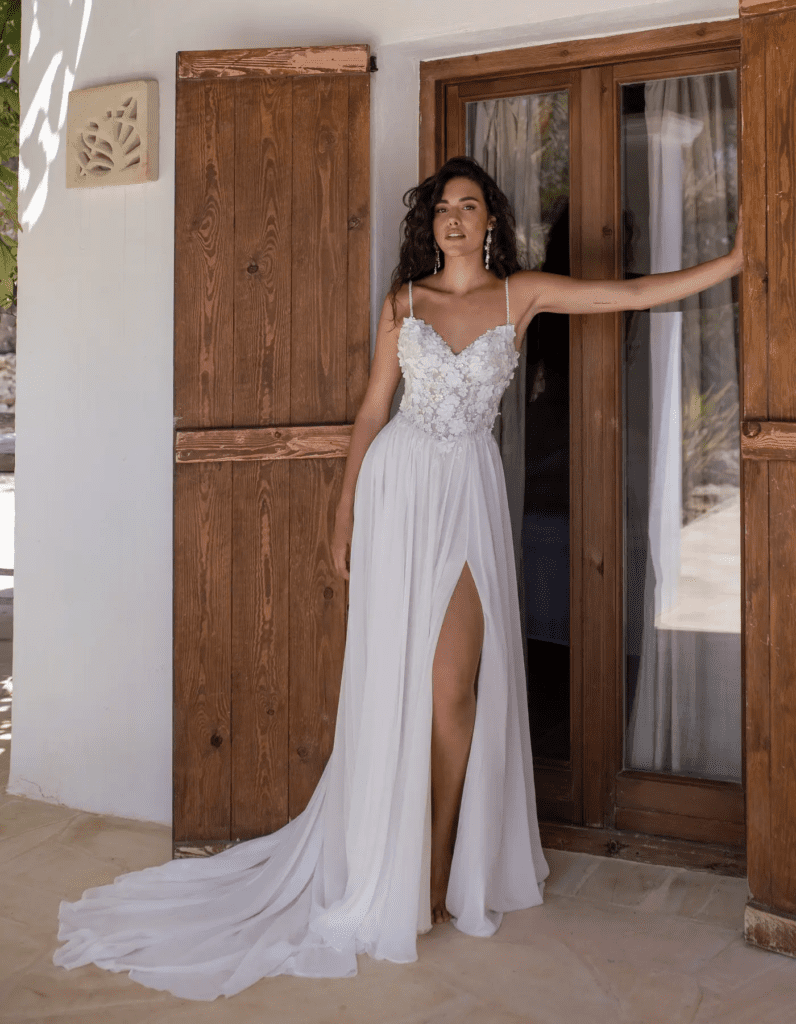
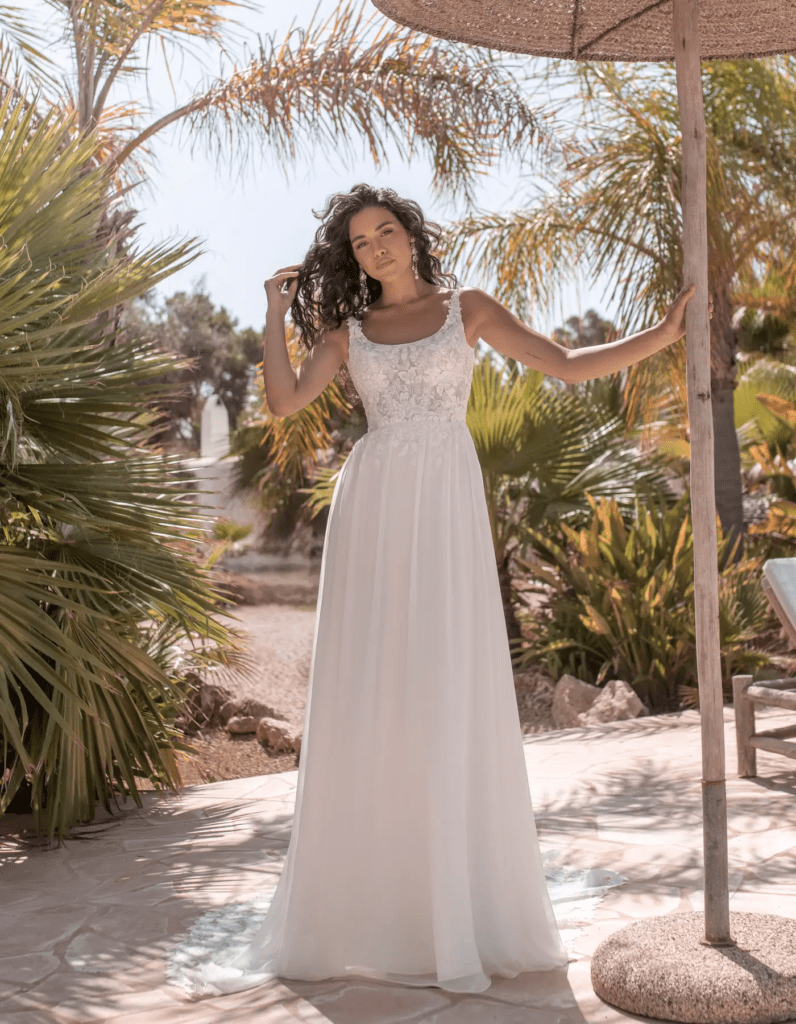
What it is:
A lightweight, sheer fabric made from finely twisted fibres.
How it looks and feels:
Soft, matte and fluid with a floaty, romantic drape.
Best for:
Warm-weather weddings, destination ceremonies, boho styles.
Chiffon is one of the lightest wedding fabrics, known for its delicate movement and ethereal feel. It’s opaque and drapes beautifully, making it ideal for relaxed silhouettes with soft pleating or layers. Chiffon is one of the most popular fabrics for destination weddings and for brides wanting an effortless, boho look.
Crepe wedding fabric
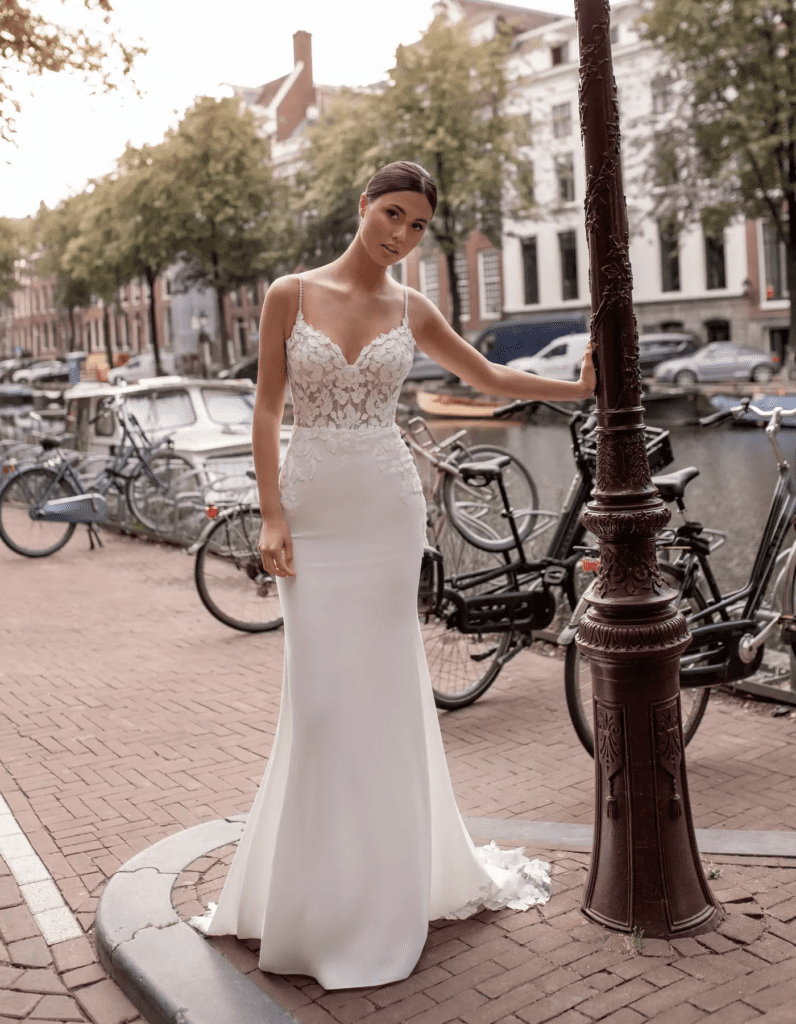
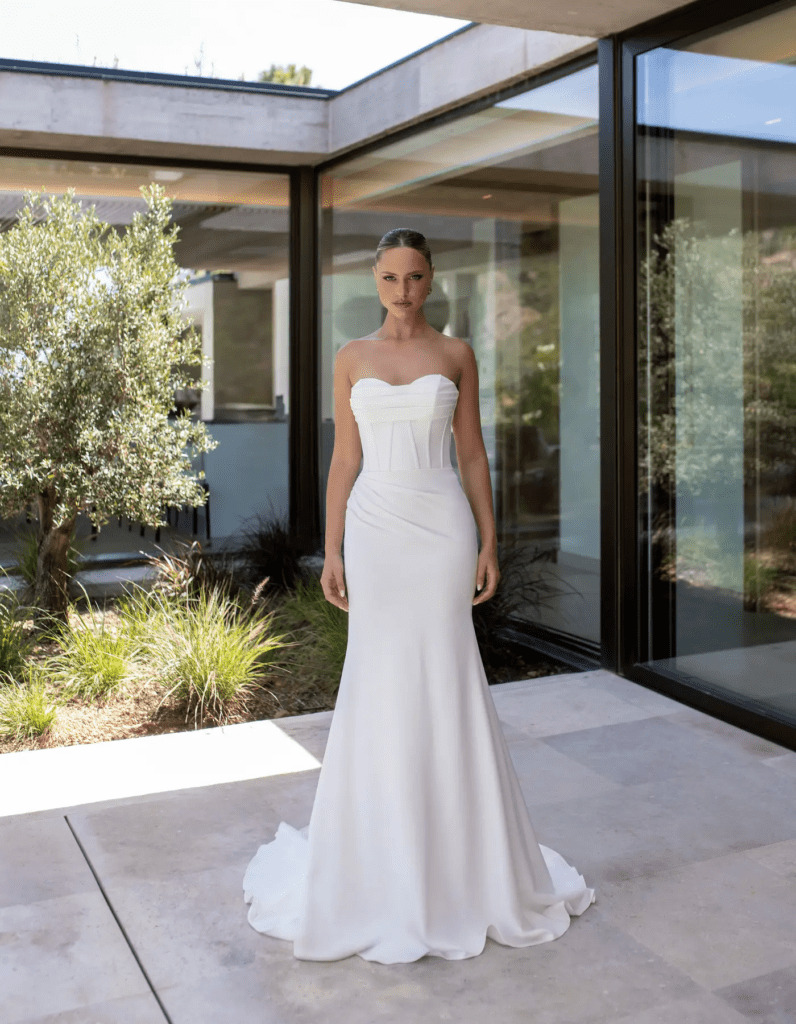
What it is:
A tightly woven fabric with a subtly grainy surface.
How it looks and feels:
Smooth, elegant and fluid with gentle stretch.
Best for:
Minimalist dresses, modern silhouettes, fitted styles.
Crepe wedding fabrics range from lightweight to heavier weights, all offering excellent drape. They skim the body without clinging, making them ideal for sheath or bias-cut gowns. Modern crepe also has natural stretch, which makes it one of the most comfortable wedding fabrics to wear year-round.
Lace wedding fabric
What it is:
A decorative fabric created using open patterns and intricate detailing.
How it looks and feels:
Varies from soft and delicate to bold and structured.
Best for:
Romantic, classic or statement wedding dresses.
Lace is one of the most versatile wedding fabrics, offering endless design possibilities. Different lace types create very different looks, from classic and floral to striking and modern.
Alençon lace

Known as the ‘Queen of Lace’, Alençon features floral motifs outlined with fine corded detail, creating a classic and elegant finish.
Chantilly lace
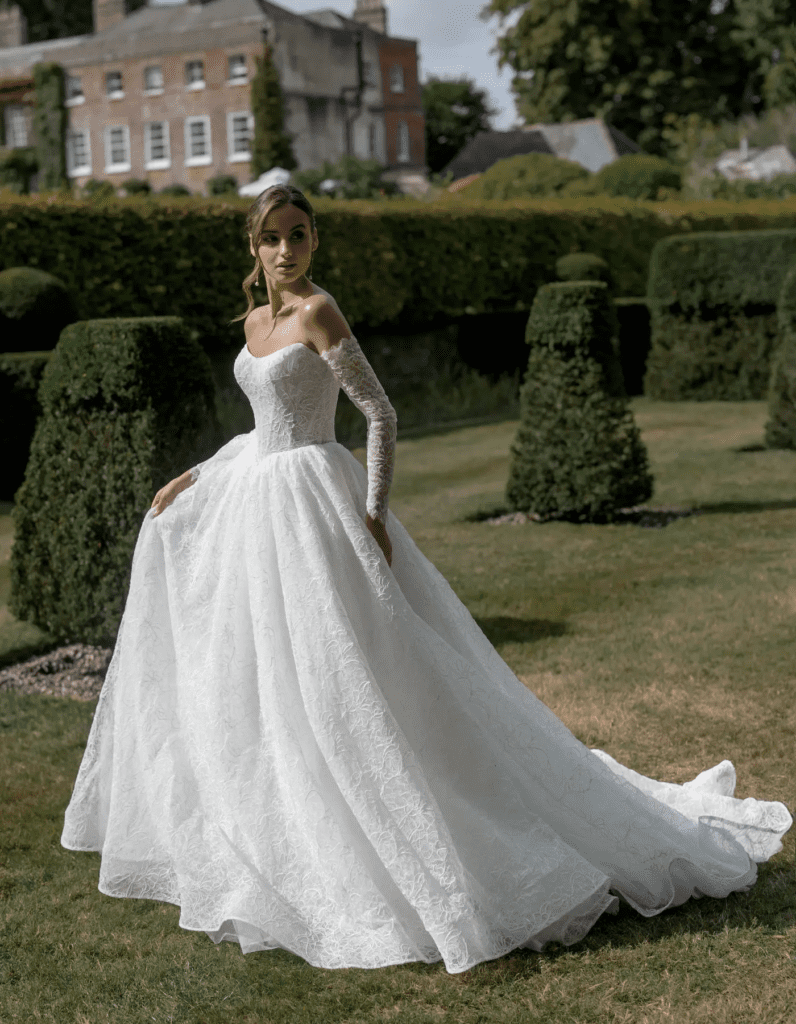
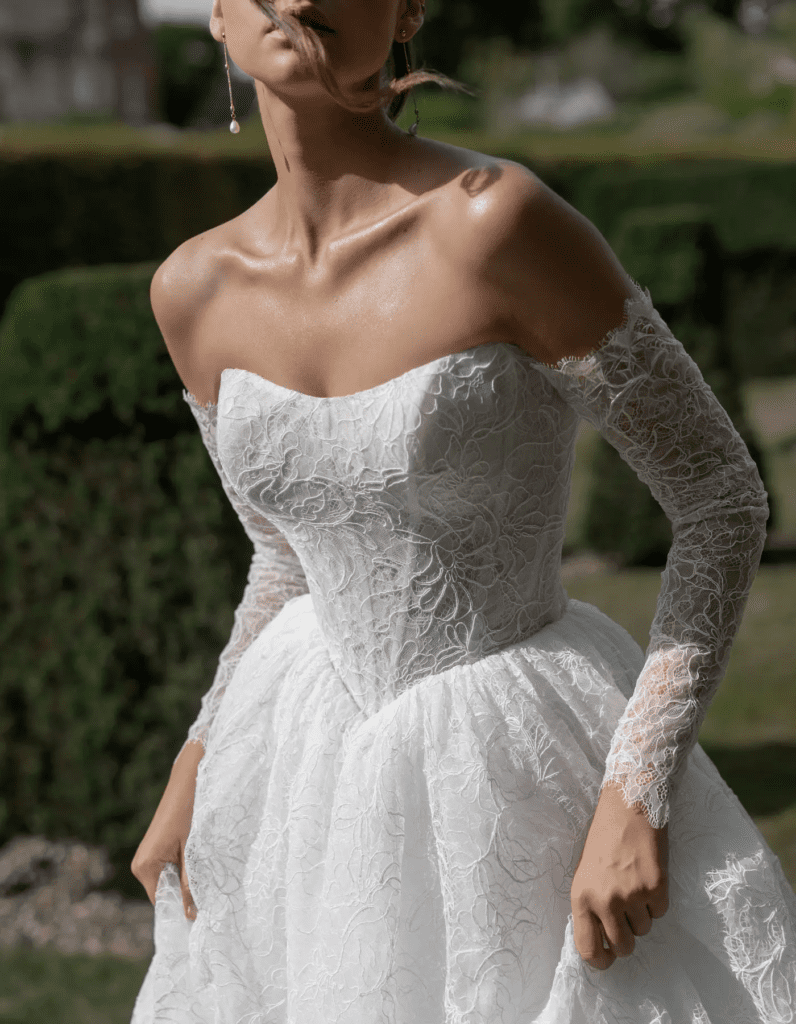
Lightweight and sheer, Chantilly lace has fine outlines and delicate floral patterns, perfect for romantic designs.
Embroidered lace
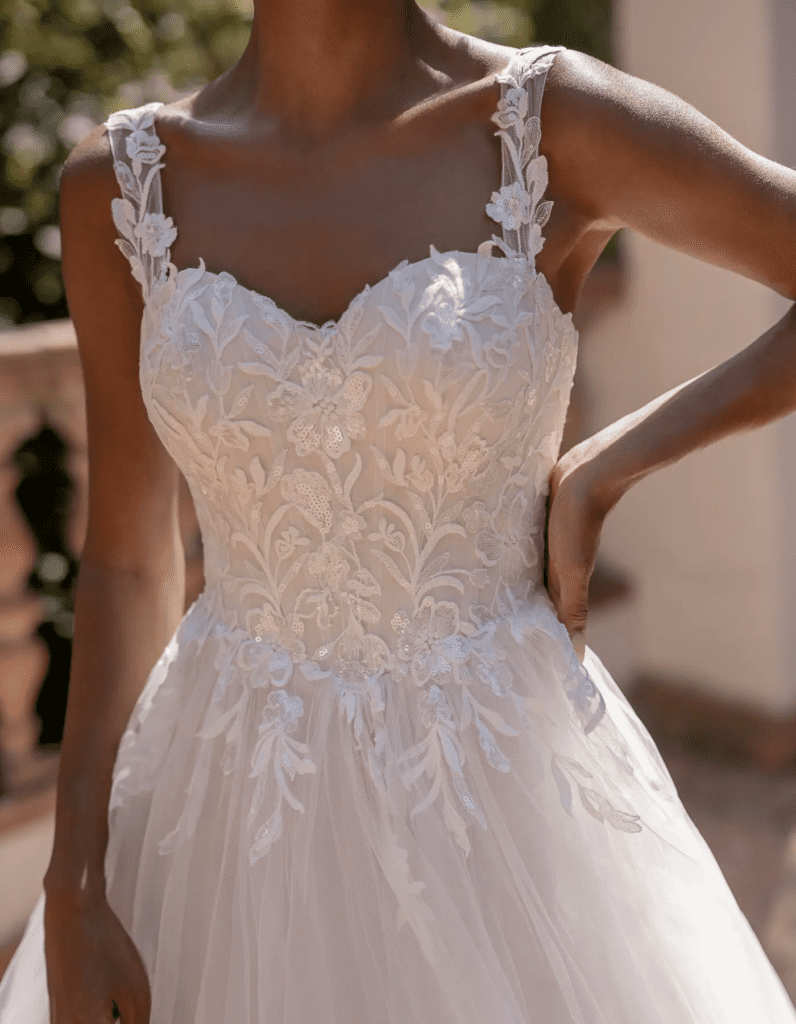
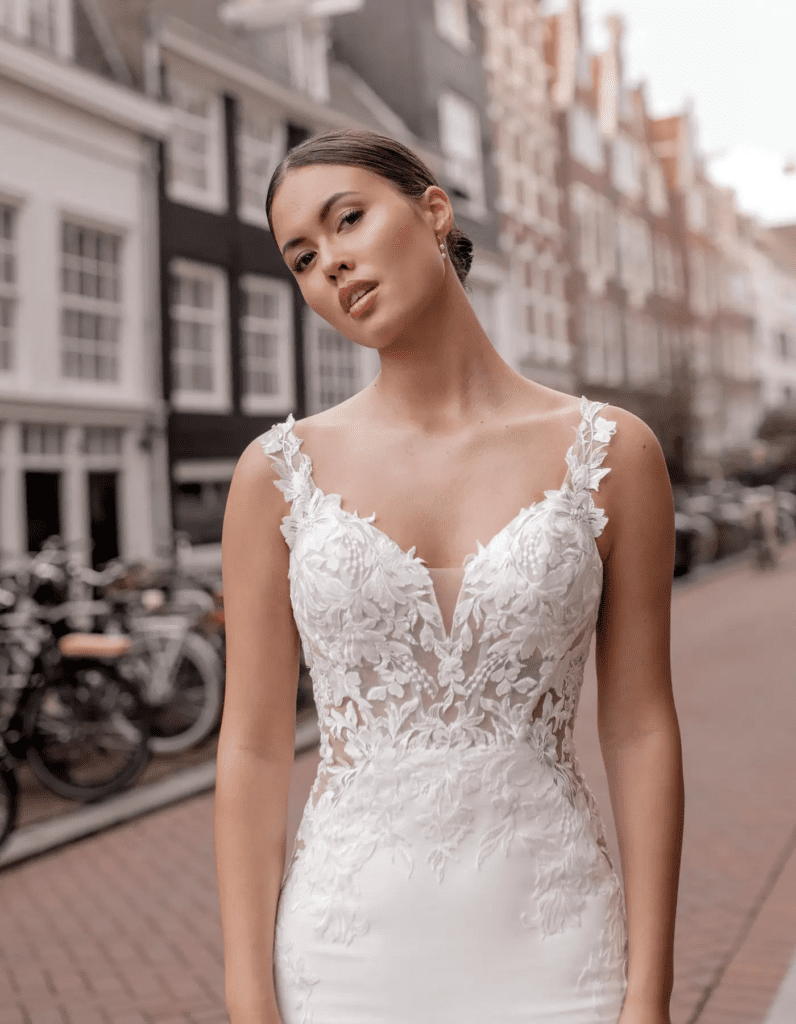
Stitched onto tulle and often cut into appliqués, embroidered lace is highly versatile and commonly used for illusion backs and bodices.
Knitted lace
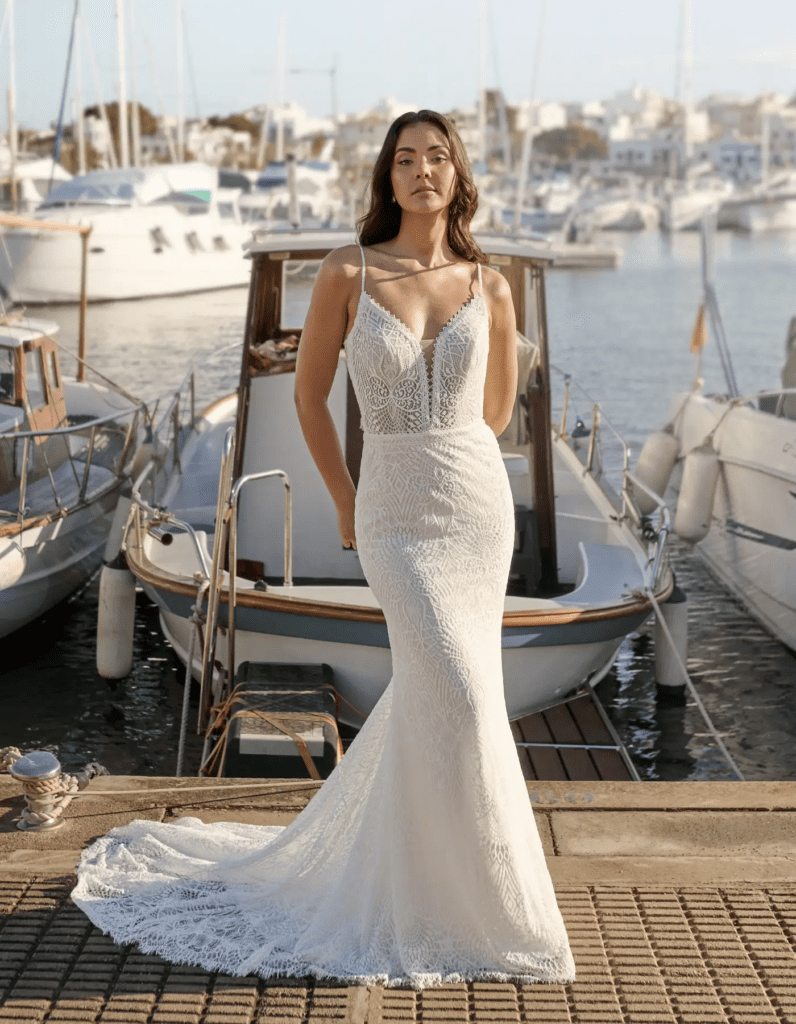
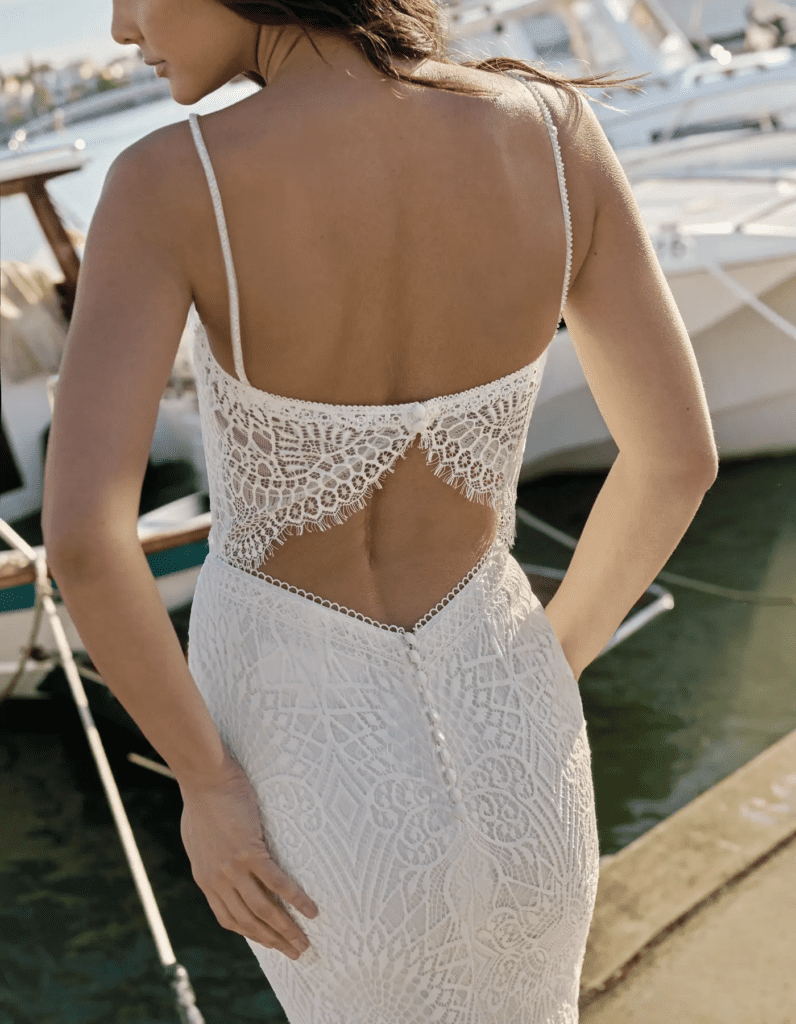
Soft with a slight natural stretch, knitted lace contours easily to the body and suits relaxed, boho-inspired styles.
3D lace
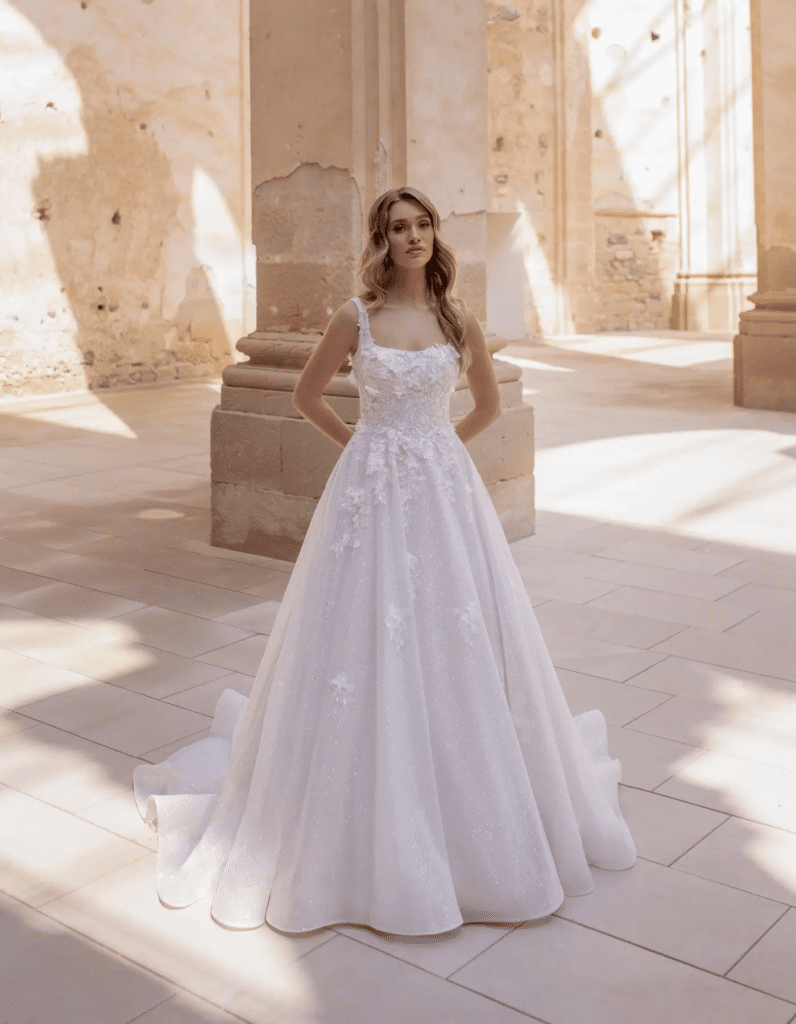
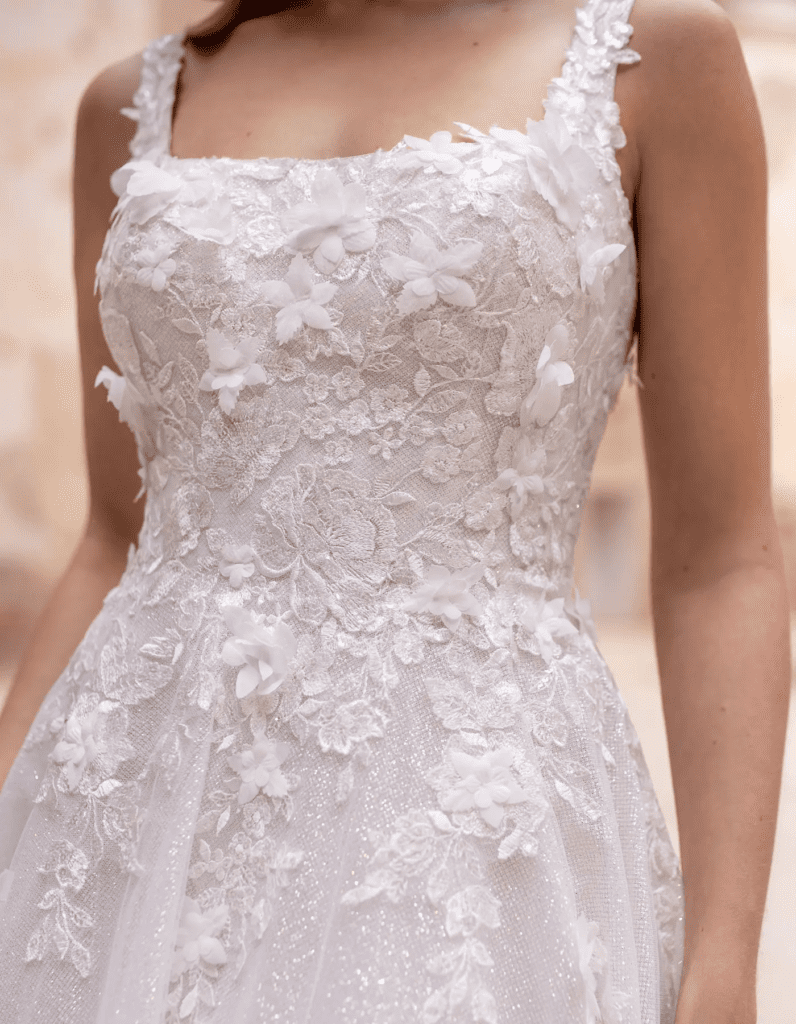
Features raised floral elements that move independently, creating texture and a modern, statement look.
Mikado wedding fabric
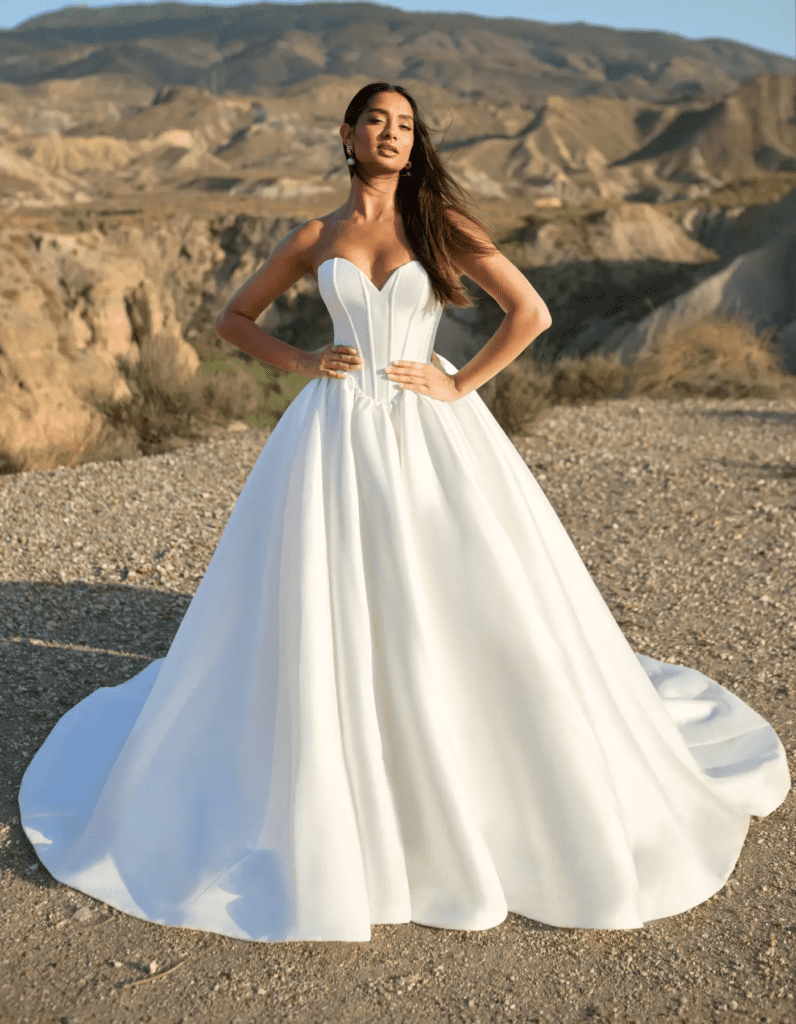
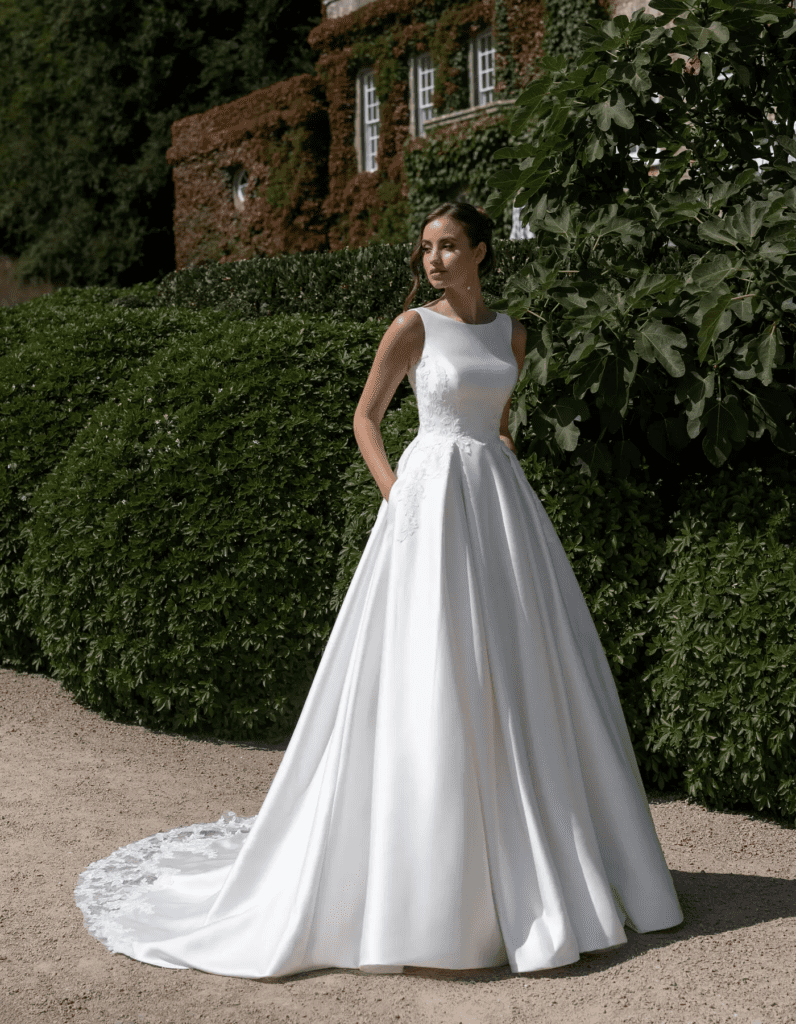
What it is:
A heavier, structured fabric with a subtle sheen.
How it looks and feels:
Smooth, crisp, luxurious and holds its shape well.
Best for:
Modern ballgowns, clean silhouettes, structured designs.
Mikado wedding fabric is prized for its ability to hold strong shapes. Its lustrous finish feels luxurious without being overly glossy, making it ideal for brides who want structure, simplicity and sophistication. It’s also a popular choice for formal venues.
Organza wedding fabric
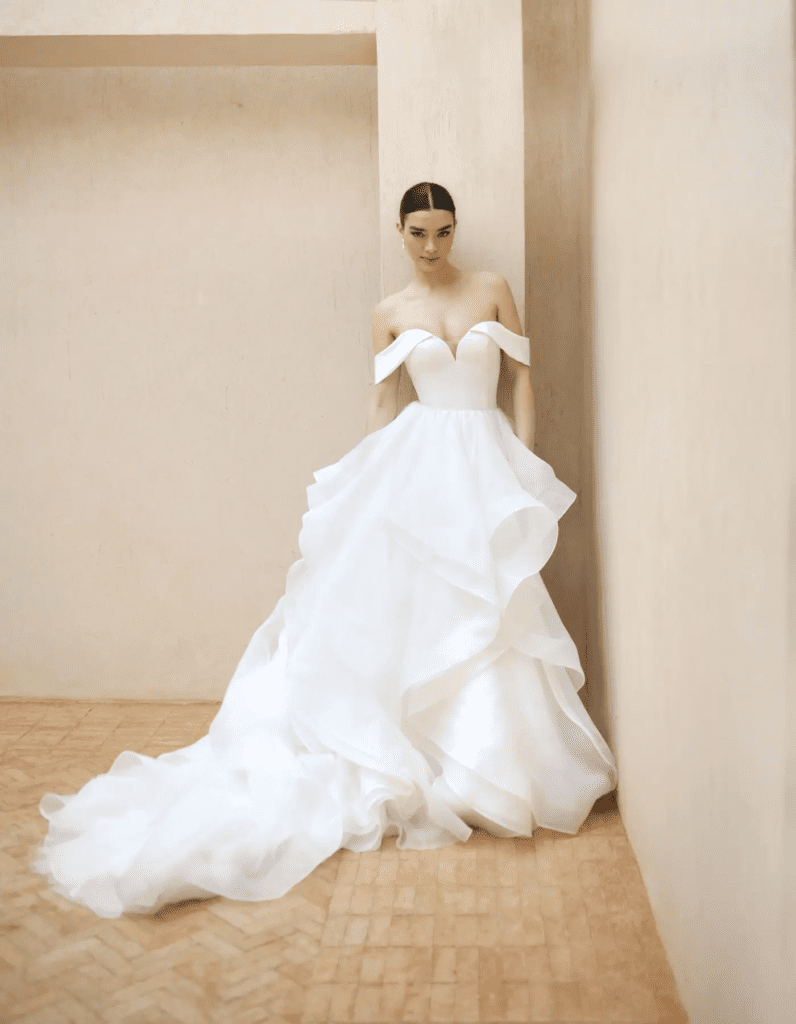
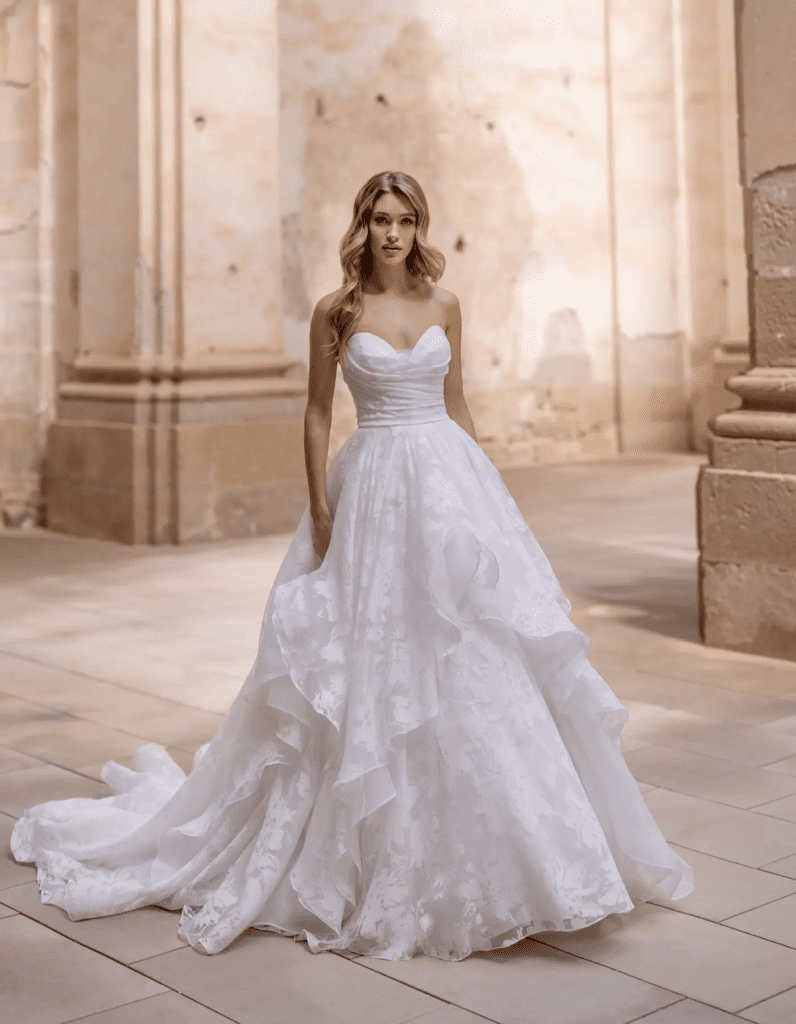
What it is:
A crisp, sheer fabric traditionally made from silk or synthetic fibres.
How it looks and feels:
Lightweight but holds its shape, offering soft movement and volume.
Best for:
Layered skirts, romantic gowns, voluminous designs.
Organza adds fullness without heaviness, making it ideal for layered silhouettes. It’s often used between lining and outer layers to add bounce, or for frothy skirts with a soft, romantic feel.
Satin wedding fabric
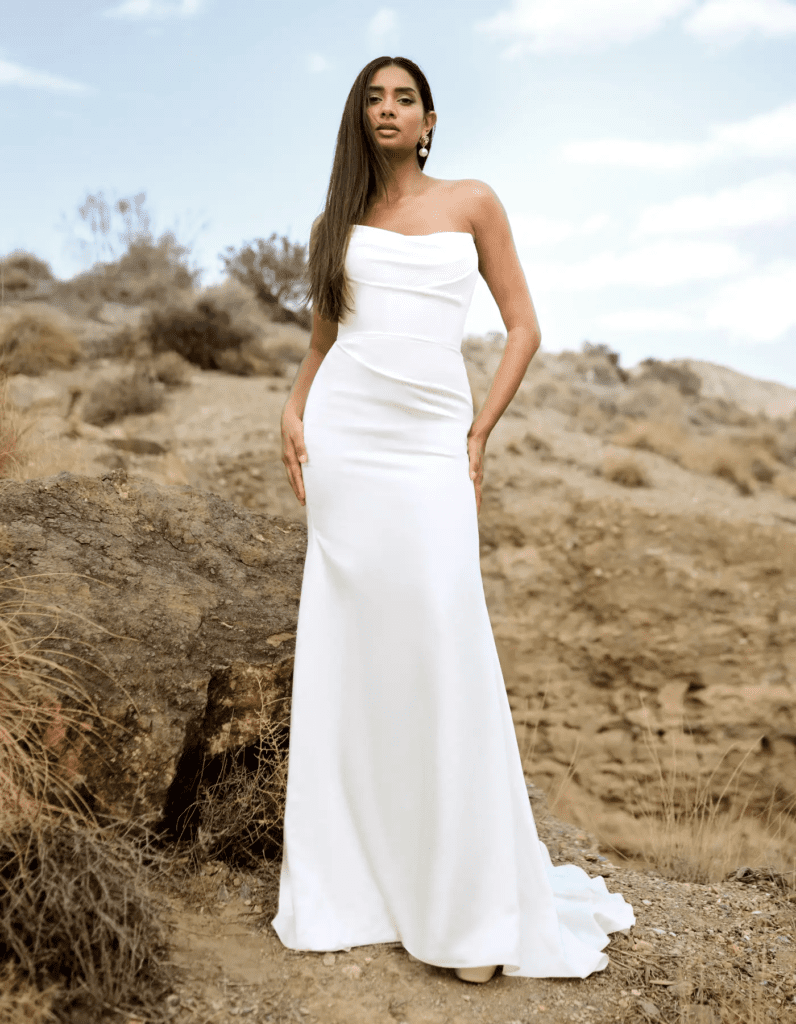
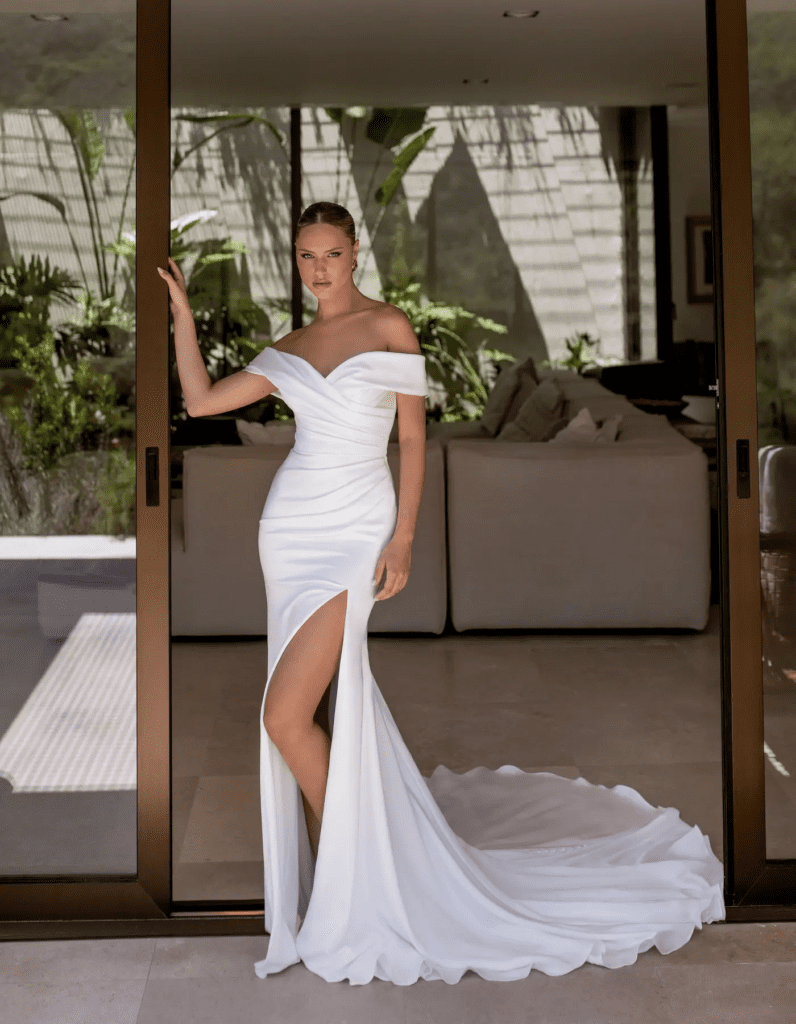
What it is:
A woven fabric with a smooth surface and high sheen.
How it looks and feels:
Glossy, smooth and elegant, with varying weights.
Best for:
Classic weddings, timeless silhouettes, formal venues.
Satin wedding fabrics range from soft and fluid to structured and firm. Heavier satins create defined shapes, while lighter satins drape softly. It’s very durable and the different weights make it suitable for all seasons.
Tulle wedding fabric
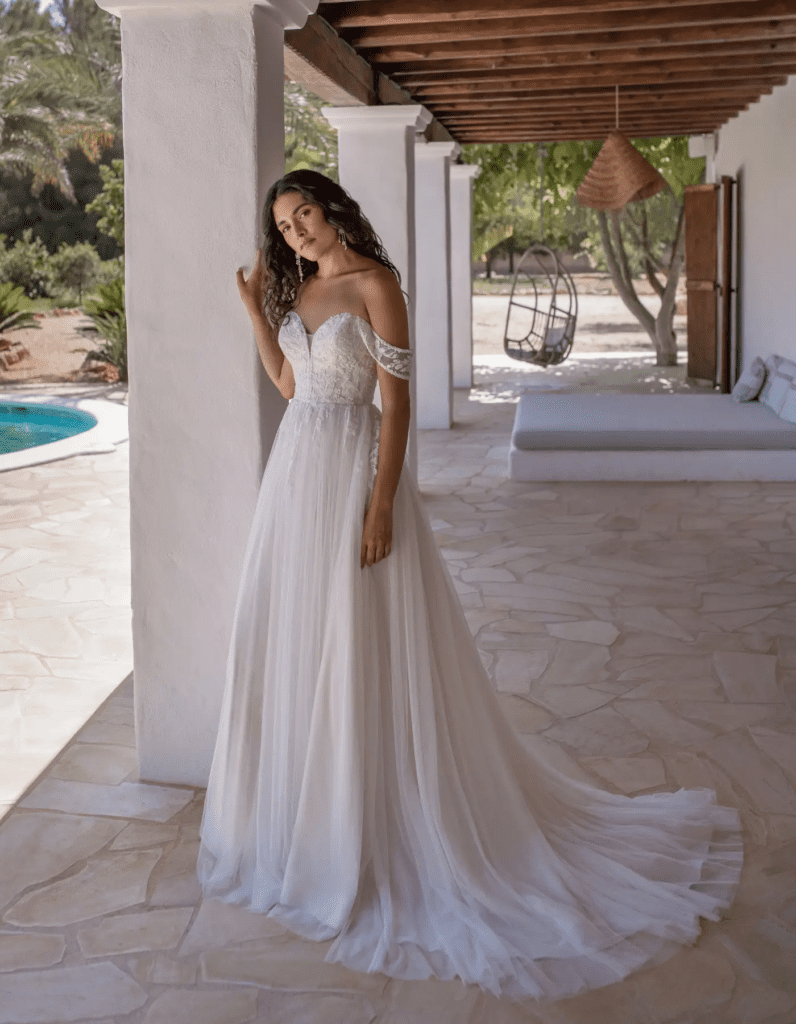
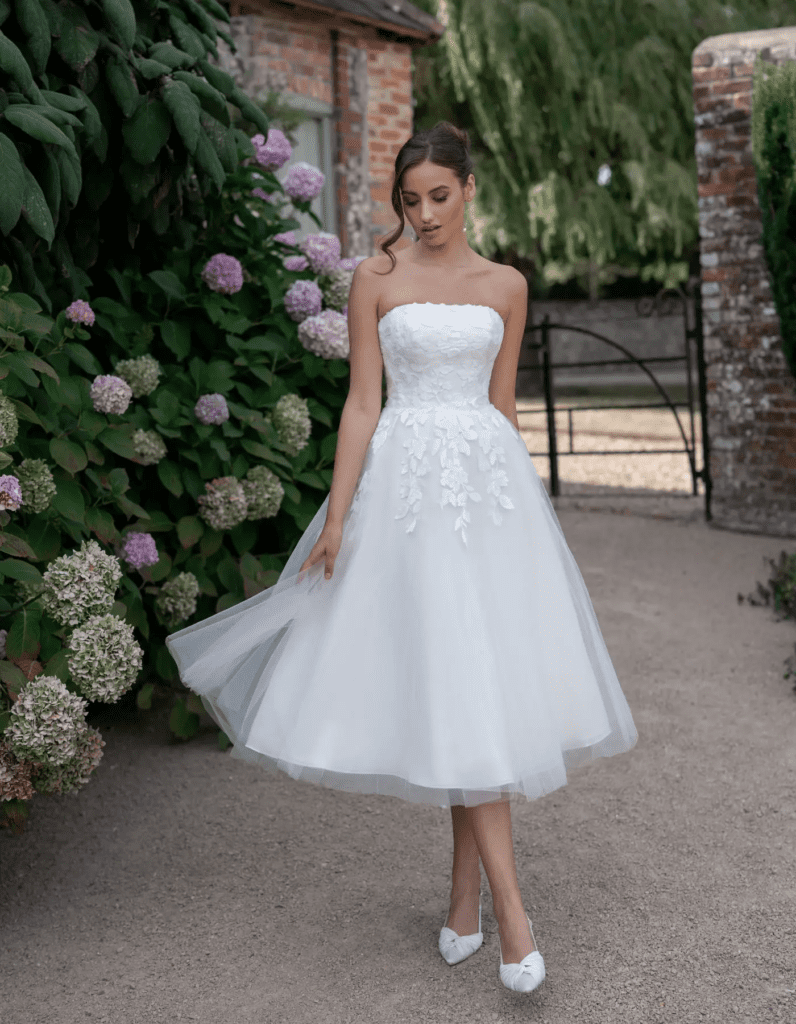
What it is:
A fine net fabric with light structure.
How it looks and feels:
Airy, slightly crisp and weightless.
Best for:
Ballgown skirts, veils, illusion details.
Tulle is a bridal staple, used for full skirts, sheer panels and veils. Plain tulle creates a soft, fairytale look, while glitter tulle adds sparkle for statement designs.
Read more: For more fabric inspo, check out our stunning real bride stories
Best wedding fabrics for different wedding styles
Choosing the right wedding fabric often comes down to your venue, season and overall style. Here’s a simple guide to help you match fabrics to your wedding type.
Best fabrics for summer weddings
For warm weather, breathable and lightweight fabrics are key. Chiffon, tulle and lightweight crepe allow airflow and feel comfortable throughout the day, making them perfect for outdoor and destination weddings.
Best fabrics for winter weddings
For cooler months, heavier fabrics provide warmth and structure. Mikado, satin and heavier lace fabrics help retain heat while creating a more formal, luxurious look.
Best fabrics for beach weddings
Beach weddings call for soft, flowing fabrics that move easily in the breeze. Chiffon and tulle are popular choices as they are lightweight, relaxed and effortless to wear.
Best fabrics for formal weddings
For traditional or formal venues, structured fabrics like Mikado and satin create a polished and elegant silhouette. These fabrics hold their shape beautifully and suit classic ballgowns and clean, modern styles.
Wedding fabric comparison guide
| Fabric | Best for | Look & feel | Ideal season |
|---|---|---|---|
| Chiffon | Beach, boho, destination weddings | Lightweight, soft, flowing | Spring / Summer |
| Crepe | Minimalist, fitted dresses | Smooth, stretchy, fluid | All seasons |
| Lace | Romantic, classic styles | Textured, detailed | All seasons |
| Mikado | Structured, modern gowns | Crisp, structured, slightly glossy | Autumn / Winter |
| Organza | Layered, voluminous skirts | Light but structured | Spring / Summer |
| Satin | Formal, timeless weddings | Smooth, glossy, luxurious | All seasons (heavier for winter) |
| Tulle | Ballgowns, veils | Airy, soft, lightweight | Spring / Summer |
How do I choose the right wedding fabric?
Choosing between wedding fabrics is unlikely to be the first thing on your planning checklist, but hopefully we’ve shown what a key role it plays in how your dress looks, feels and moves. So, use your venue, personal style and the time of year as your starting points.
Also, for more advice, chat to our friendly bridal experts (both online and instore) and they can offer suggestions tailored specifically to you and your special day. So, drop in today, they can’t wait to help you find your new favourite fabric!
Read more: How to buy your wedding dress: Timeline, Tips and Expert Advice
FAQs About Wedding Fabrics and Choosing the Right Material
What is the best fabric for a wedding dress?
There is no single best wedding fabric. The right choice depends on your venue, season and personal style. As a rough guide, lightweight fabrics often suit relaxed ceremonies and warm climates, while structured fabrics work well for cooler temperatures and more formal settings.
What wedding fabrics are best for summer weddings?
Chiffon, tulle and lightweight crepe are ideal for summer weddings. These fabrics are breathable, comfortable and move easily in warm weather.
Are lace wedding dresses heavy?
Not all lace wedding dresses are heavy. Lace varies by type and many laces are lightweight, especially when layered over tulle or chiffon.
Which wedding fabrics are most flattering?
Flattering fabrics depend on the silhouette you love. Crepe skims the body smoothly, Mikado has a more defined structure and chiffon creates soft movement.
What fabric works best for a structured wedding dress?
Mikado and heavier satins are best for structured wedding dresses. These fabrics hold shape well and create clean, crisp lines.
Explore our full collection of wedding dresses, then try on your favourites at your nearest wed2b store. You can also find out what to expect at your appointment. For more bridal inspiration, visit our Instagram, Facebook and TikTok.
Share this article


