
Style & Trend
Wedding Dress Bustles: Types, How to Bustle & Expert Tips
Everything you need to know about the wonderful wedding dress bustle - what they are, how they work and the perfect one for your gown
Find out what a wedding dress bustle is, why you might want one and which style is the best choice for you with our expert guide…
Key takeaways
- A wedding dress bustle is a set of hooks, buttons, loops or ribbons that lifts your train off the floor after the ceremony.
- Most bustles are added during alterations, and the best bustle type depends on your train length, fabric weight and dress silhouette.
- American (over) and French (under) bustles are two of the most common options, while ballroom bustles create a smooth, floor-length look.
- Practising your bustle before the big day—and choosing one person to help—makes bustling quicker and less stressful.
- Simple alternatives like wrist loops, detachable trains or overskirts can be a better fit if you don’t want a traditional bustle.
Congratulations, if you’re reading about wedding dress bustles then you’ve found your perfect dress! And, if it’s a chic mini, a tea dress or a slim-fitting sheath then bustles aren’t for you. However, if you’ve chosen a style with any kind of train, whether that’s a modest short wedding dress train or a very long wedding dress train, then you’ve come to the right place.
Our bridal experts have put together their bustle wedding dress guide, so you can move with ease on the big day and dance until the small hours without tripping over your train. So, read on to discover everything there is to know about the humble bustle…
What Is a Wedding Dress Bustle?
A wedding dress bustle is a set of hooks, buttons, loops or ribbons added to the back of a gown to lift the train off the floor after the ceremony.
The purpose of a bustle is simple but essential, it protects your train from damage, makes walking and dancing easier and allows you to enjoy your evening reception without having to hold your dress up.
Why Wedding Dresses Use Bustles
- Prevents tripping and tearing
- Keeps the hem clean for evening celebrations
- Preserves the shape and drama of the gown
- Allows freedom of movement for dancing
Dresses that often need a bustle:
- A-line
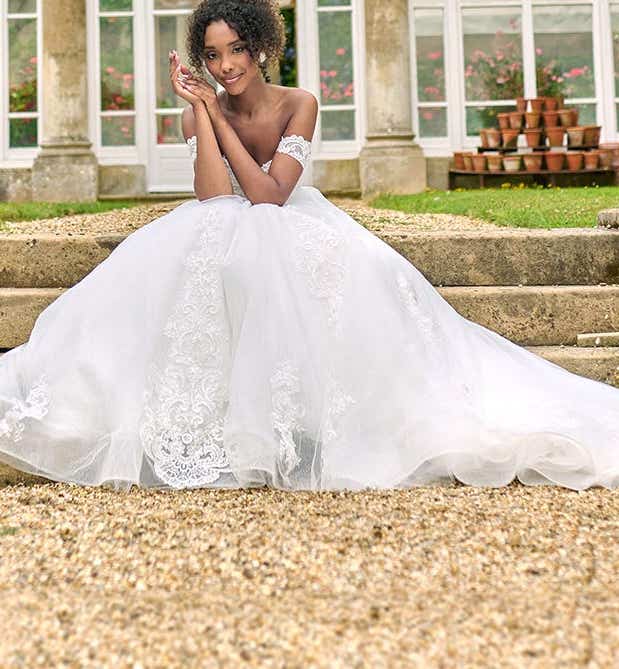
- Ballgown
- Fit and flare or mermaid dresses with long trains
- Cathedral- or chapel-length trains
Dresses that generally don’t need a bustle :
- Mini dresses
- Tea lengths
- Sheath or column dresses without a train
Read more: Explore gowns with stunning trains
How to Bustle a Wedding Dress
Understanding how to bustle a wedding dress will help reduce stress on the big day and will ensure your gown looks flawless from every angle.
How bustles are added
Bustles are usually added by a professional seamstress during an alterations appointment. The process involves:
- Assessing the train length, weight and fabric
- Choosing the most suitable bustle type
- Adding discreet buttons, hooks or loops
- Testing the bustle when the dress is worn
What happens at your bustle fitting
- You’ll walk and sit to test comfort
- The fitter will adjust the height and symmetry
- The bustle is secured and photographed for reference
Rehearse the bustle
Once you’ve got your bustle sorted, you’ll need to practice it before the big day, so:
- Ask your fitter to show you how to do it, step by step
- Take photos or short videos
- Choose someone to help you and practice with them
Tools needed to bustle a dress
- Bustle buttons or hooks
- Fabric loops or ribbons
- Safety pins (as an emergency backup)
- A reference photo or fitting card
Different Types of Wedding Dress Bustles
There are different wedding bustle types to suit different styles of dress and also different tastes. Each bustle type lifts the train differently, depending on your dress fabric, weight and silhouette. Here are some of the most popular…
American Bustle (Over Bustle)
Also known as the over bustle, this popular style lifts the train and fastens it on top of the skirt.

How it works:
- The train is folded upward
- Buttons attach to loops on the outer skirt
Best for:
- A-line gowns
- Ballgowns
- Structured or heavier fabrics
Why brides love it:
- Easy to attach
- Very secure
- Creates a dramatic draped look
Ballroom Bustle
The ballroom bustle makes the skirt appear floor-length, as if the train never existed.

How it works:
- The train is tucked underneath
- Multiple hidden attachment points keep the hem even
Best for:
- Ballgowns
- Satin or mikado fabrics
- Formal, classic weddings
Why brides love it:
- Seamless finish
- Perfect for grand venues
- Ideal for heavier skirts
Bow Bustle
A bow bustle uses decorative ties or fabric bows to lift the train.

How it works:
- Bows or ribbons secure the train
- Often visible and intentionally decorative
Best for:
- Romantic or vintage-inspired dresses
- Soft tulle or chiffon skirts
Why brides love it:
- Adds a design feature
- Feminine and playful
- Works beautifully in photos
French Bustle (Under Bustle)
The French bustle, or under bustle, tucks the train underneath the skirt using colour co-ordinated ribbons.The finished look is an understated fold, two-thirds of the way down the skirt.

How it works:
- Fabric is folded inward
- Secured with ribbons or loops underneath
Best for:
- Lace gowns
- Fit-and-flare silhouettes
- Lightweight fabrics
Why brides love it:
- Keeps embellishments visible
- Creates a soft, cascading shape
- Less visible hardware
Victorian / Royal Bustle
This is a multi-point bustle designed for very long or dramatic trains.

How it works:
- Several attachment points lift the train in stages
- Creates a layered, draped effect
Best for:
- Cathedral-length trains
- Statement gowns
- Traditional or regal styles
Why brides love it:
- Handles heavy trains securely
- Maintains drama without bulk
Train Flip Bustle
Like the ballroom bustle but simpler, the train is flipped and pinned to itself (rather than higher up), creating the illusion of a floor-length gown with an even fuller base.
Best for:
- Lightweight gowns
- Shorter trains
Wrist Loop Alternative
A wrist loop is not a true bustle, but is a helpful alternative to a bustle.
How it works:
- A discreet loop allows the bride to carry the train on her wrist
Best for:
- Casual receptions
- Outdoor ceremonies
Read more: Discover more silhouettes that suit a bustle
Top Wedding Dress Bustle Tips
These expert bustle tips for brides will help your day run smoothly.
When to bustle your dress:
- After the ceremony photos
- Before mingling or your first dance
Practise beforehand:
- Don’t rely on memory alone
- Share instructions with your bridal party
Choose the right helper:
- Ask one bridesmaid to help
- Find time to practice with her before the day
Consider your fabric:
- Tulle needs multiple points
- Satin requires strong buttons
- Lace benefits from under bustles
Know the costs:
- Typical bustle alterations can cost anywhere between £50–£150
- Complex bustles may cost more
- Allow 2–3 weeks for alterations
Bustle Alternatives
However, not every bride wants or needs a bustle. These alternatives may suit your style better.
Wrist loops
- Simple and affordable
- Less practical for dancing
Detachable trains
- Train removes completely
- Popular for modern gowns
- Dramatic ceremony look
- Lightweight for the evening
No-bustle gowns
- Boho styles
- Minis and sheaths
- Dresses designed for ease of movement
Read more: Check out our minimalist ‘No Bustle’ dresses
How wed2b Can Help You
Need more help? At wed2b, our expert fitters will guide you through every step of choosing and understanding your bustle.
We offer
- In-store fittings with trained specialists
- Advice tailored to your dress silhouette both online and instore
- How to attach a bustle demonstrations
- Support choosing accessories that work with your bustle
- Contact details for local alteration specialists
Plus, don’t forget to read our guide to train lengths, to help you decide how long to go and also our guide to wedding dress shapes to find the perfect skirt. Then lastly, take a look at our gorgeous real life brides too, to see how they styled their beautiful wed2b trains.
Plan your visit: Find your nearest store for expert bustle advice
FAQs About Wedding Dress Bustles
Do all wedding dresses need a bustle?
No. Wedding dresses without a train, such as mini, tea-length or sheath styles, usually don’t need a bustle. Bustles are designed for gowns with a train to make movement easier after the ceremony.
What is the easiest wedding dress bustle?
The American bustle, also known as an over bustle, is often considered the easiest to attach. It uses visible buttons and loops and is secure enough for walking and dancing.
Can you bustle a tulle wedding dress?
Yes. Tulle wedding dresses can be bustled, but they often require multiple attachment points. Ballroom or multi-point bustles are commonly used to support the lightweight layers evenly.
How long does a bustle last during a wedding?
A professionally added bustle should last throughout the evening, including dancing. For peace of mind, it’s a good idea to carry safety pins in case a button or loop comes loose.
Can a wedding dress bustle break?
It’s rare, but a bustle can occasionally come undone during the day. Keeping a small emergency kit with safety pins, a needle and thread can help resolve any issues quickly.
When should you bustle your wedding dress?
Most brides bustle their dress after the ceremony photos and before the reception begins. This keeps the train looking beautiful in photos while allowing freedom of movement later on.
Click here to check out all our wedding dresses, then try on your favourites at your nearest wed2b store. Here’s what to expect when you visit, too. Lastly, for more inspiration, check out our Instagram, Facebook or TikTok accounts.
Share this article
Related Articles
-
 08/04/24
Style & Trend
The complete guide to… wedding dress train lengths
Everything you need to know about choosing the right train
-
 17/07/19
Style & Trend
We reveal your dream wedding dress train…
Much like your veil, a wedding dress train can be key to that all-important bridal...

